What Do You Need to Know About Khao Yai?
When you get to know Khao Yai, you discover Thailand’s oldest national park and a protected UNESCO World Heritage site located just 3 hours northeast of Bangkok. Spanning over 2,000 square kilometers across the Sankamphaeng Mountain Range, Khao Yai is famous for free-roaming wild Asian elephants, pristine monsoon rainforests, thunderous cascades like Haew Suwat Waterfall, and cool year-round mountain air. Entry fees for international visitors are 400 THB for adults and 200 THB for children. Whether you want to trek deep jungle trails, sip wine at European-style vineyards, or join an open-air night safari, finalizing your itinerary with a certified local guide ensures an unforgettable experience. Lock in your seamless mountain escape, park transfers, and ranger-led safaris with a direct Tour Booking today!
Welcome to Khao Yai: Thailand’s First National Park
Imagine swapping the neon-lit avenues and hum of Bangkok for mist-shrouded mountain ridges, ancient rainforest canopies, and the distant call of white-handed gibbons echoing through the valley. As you get to know Khao Yai, you quickly realize why this expansive wilderness remains Thailand’s most beloved natural sanctuary.
Established in 1962 as the country’s very first national park, Khao Yai forms the core of the Dong Phayayen-Khao Yai Forest Complex. Because the park rests on an elevated plateau between 400 and 1,000 meters above sea level, it enjoys a pleasant microclimate that feels refreshing, crisp, and distinctly different from the tropical heat of Thailand’s central plains.
Key Facts & Geographic Breakdown
To help you visualize the park before your arrival, here is an essential snapshot of what makes this ecosystem so extraordinary:
| Aspect | Essential Park Details |
| Location | Spans 4 provinces: Nakhon Ratchasima, Saraburi, Prachinburi & Nakhon Nayok (Gateway: Pak Chong) |
| Total Protected Area | 2,168 square kilometers (837 square miles) |
| Distance from Bangkok | ~180 kilometers (112 miles) — 2.5 to 3 hours by car |
| Status | UNESCO World Heritage Site (Designated 2005) |
| Entry Rates | Foreign Adults: 400 THB | Foreign Children: 200 THB | Vehicle Permit: 30 THB |
Top Highlights: What to See and Do
Once you enter through the northern gates, a diverse range of natural wonders and lifestyle attractions opens up before you. Here are the non-negotiable stops every traveler should include in their itinerary.
1. Haew Suwat & Haew Narok Waterfalls
Waterfalls are the lifeblood of Khao Yai’s dense jungle network:
- Haew Suwat Waterfall: Famous worldwide after being featured in the Hollywood movie The Beach, this 20-meter cascade tumbles over a curved volcanic rock cliff into a cool pool surrounded by lush foliage.
- Haew Narok Waterfall: The largest and most powerful waterfall in the park. Falling across three dramatic tiers totaling over 150 meters, the sheer volume of water during the green season creates a roaring spray that can be heard long before you reach the viewing platform.
2. Wildlife Watching at Nong Phak Chi Watchtower
For nature lovers eager to spot wild Asian elephants, sambar deer, and gaurs (wild bison), the Nong Phak Chi watchtower is a prime vantage point. Reached via a scenic 1.4-kilometer trail that winds through open savannah grasslands and salt licks, the elevated wooden tower lets you scan the horizon with binoculars in complete safety.
3. European-Style Vineyards & Tuscan Villages
Outside the official national park boundaries lies the picturesque Pak Chong countryside. Driven by cool winter temperatures and rich soil, the region has transformed into Thailand’s premier wine country:
- PB Valley Khao Yai Winery: Take guided tram tours through rolling vineyards, sample award-winning Shiraz and Chenin Blanc wines, and enjoy farm-to-table dining.
- Primo Piazza & Toscana Valley: Marvel at Italian-inspired architecture, cobblestone plazas, and Tuscan towers set against lush mountain backdrops—a photographer’s dream.
The Seasonal Climate Guide
When planning your escape, understanding the seasonal weather patterns helps you pack the right gear and set clear expectations.
| Season | Operational Months | Weather Conditions | Best Activities |
| Cool & Dry Season | November – February | Crisp, dry, 15°C–22°C (Night drops to 10°C) | Glamping, photography, flower gardens & wine tasting |
| Hot & Sunny Season | March – May | Clear skies, warm 25°C–32°C, cool forest shade | Wildlife tracking near salt licks & birdwatching |
| Rainy / Green Season | June – October | Lush foliage, afternoon mist, warm 20°C–28°C | Full-volume waterfalls & off-peak jungle treks |
The Cool Season (November to February)
This is the peak travel window. Daytime temperatures average 18°C to 22°C, while nighttime temperatures can drop down to 10°C at higher camping elevations. The weather is crisp, rainfall is rare, and blooming flower fields fill the valley.
The Hot Season (March to May)
Daytime temperatures warm up to 30°C, but dense forest canopies and mountain elevation keep the park significantly cooler than lowland Bangkok. Animals gather near water sources, making wildlife tracking rewarding.
The Rainy Season (June to October)
The rainforest earns its name during these months. Short, invigorating tropical showers turn the landscape into an emerald paradise. Waterfalls run at full volume, misty clouds hang over mountain peaks, and visitor crowds thin out dramatically.
Unlocking the Magic: Guided Treks & Night Safaris
While driving along paved park roads allows you to visit viewpoints, true adventure begins when you step onto wilderness trails with a certified ranger.
| Activity Type | Duration | Primary Species Observed | Guide Requirement |
| Ranger-Led Day Trek | 2 – 4 Hours | White-handed Gibbons, Great Hornbills, Macaques, Pit Vipers | Mandatory for safety |
| Watchtower Observation | 1 – 2 Hours | Sambar Deer, Barking Deer, Gaurs, Wild Boars | Recommended |
| Open-Air Night Safari | 1 Hour (7 PM & 8 PM) | Asian Elephants, Porcupines, Civets, Owls | Mandatory (Ranger Driven) |
Ranger-Led Jungle Hiking
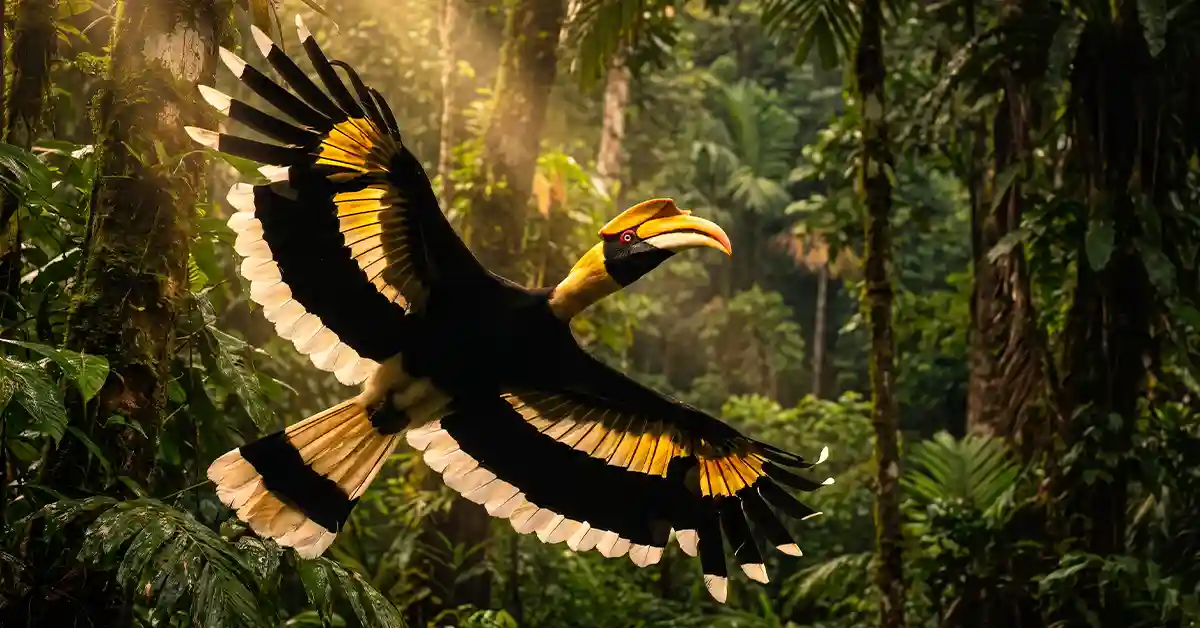
Navigating inner trails safely requires an official ranger. Experienced guides know how to read broken branches, identify animal footprints, and point out hidden creatures—such as Great Hornbills nesting high in tree hollows or flying squirrels leaping across the canopy.
The Legendary Night Safari Drive
As twilight settles over the mountains, Khao Yai transforms into an entirely different realm. The park is renowned across Southeast Asia for its official Night Safari Drive.
Climbing into an open-air safari truck operated by park rangers, you set off into the dark equipped with animal-safe spotlights. As the light sweeps across misty meadows, you can spot:
- Wild Asian elephant families foraging in the night grass.
- Shy Malayan porcupines and civets searching for food along forest edges.
- Sambar deer herds grazing quietly under the stars.
Traveler Tip: To safeguard animal habitats, park rangers strictly cap the number of safari trucks allowed entry each night. Booking your safari slot in advance is highly recommended!
Transportation & Accommodation Essentials
Getting your logistics right makes your trip seamless from start to finish.
How to Get There
- Private Car Charter: The fastest, most comfortable option (2.5 to 3 hours from central Bangkok). Having a dedicated driver gives you complete freedom to travel between spread-out park attractions.
- Public Bus/Minivan: Take a minivan from Bangkok’s Mochit New Van Terminal to Pak Chong town (3.5 hours). From Pak Chong, hire a local songthaew pickup truck or rent a scooter to reach the park gates.
- Train: Catch a scenic train from Krung Thep Aphiwat Central Terminal to Pak Chong Station, perfect for slow-travel enthusiasts.
Where to Stay
- Luxury Glamping & Resorts: Options range from Scandinavian wooden cabins along Thanarat Road to safari-style tented camps like Marasca Khao Yai or Lalamukha.
- Park Camping Grounds: Lam Takong Campground inside the park offers tent rentals, sleeping pads, and campfire atmospheres right next to roaming deer.
Secure Your Khao Yai Adventure Today
Why deal with crowded public transport, ticket counter queues, or sold-out ranger schedules? When you reserve a private tour package ahead of time, you gain complete peace of mind:
- Private, air-conditioned door-to-door transfer from your Bangkok hotel or airport.
- Pre-arranged park entry tickets and vehicle permits.
- A certified English-speaking naturalist guide dedicated to your group.
- Guaranteed seats on the official evening night safari drive.
Ready to explore Thailand’s premier natural paradise? Lock in your certified guide, comfortable private transfer, and night safari today!
[Book Now]
Frequently Asked Questions
1. What makes Khao Yai National Park famous?
Khao Yai is famous for being Thailand’s first national park, its UNESCO World Heritage status, wild Asian elephant herds, roaring waterfalls like Haew Suwat, and its cool mountain microclimate located close to Bangkok.
2. How much is the official entrance fee for international visitors?
The entry fee is 400 THB for foreign adults and 200 THB for foreign children (under 14 years old), plus a 30 THB fee per vehicle.
3. Can I easily get to know Khao Yai on a day trip from Bangkok?
Yes, a day trip via private car charter is very popular. Leaving Bangkok early in the morning (around 6:00 AM) gives you 6 to 8 hours inside the park to hike trails, visit waterfalls, and see wildlife before returning at night.
4. Is it safe to see wild elephants in Khao Yai?
Yes, provided you keep a safe distance and follow your ranger’s instructions. When driving, remain inside your vehicle, do not honk your horn, and allow wild elephants plenty of space to cross roads.
5. What clothing should I pack when I visit Khao Yai?
Pack breathable, quick-dry clothes and sturdy hiking shoes for daytime trails. If visiting during the cool season (November to February), bring a warm fleece jacket or sweater for chilly nights.
6. Do I need a guide to hike inside the national park?
Short, paved paths near visitor centers can be walked on your own. However, entering deeper jungle trails like Nong Phak Chi legally and safely requires an official park ranger or licensed naturalist guide.
7. How far in advance should I make my Tour Booking?
For travel during the peak months of November through February, completing your Tour Booking at least 2 to 3 weeks in advance ensures you secure private transport, boutique hotel rooms, and safari slots.
8. What is the best season to see cascades at full power?
The late rainy season in September and October brings peak water flow, turning Haew Narok and Haew Suwat into powerful, thunderous waterfalls.
9. Are there wild tigers in Khao Yai National Park?
While camera traps have recorded rare big cats deep in the protected forest complex, sightings along main tourist trails are extremely rare. You are far more likely to see elephants, gibbons, deer, hornbills, and macaque monkeys.
10. Can I rent camping equipment inside the park?
Yes, the Lam Takong Visitor Center provides tent, sleeping bag, mat, and pillow rentals at very affordable rates for travelers who want to camp under the stars.